



SparkFun Qwiic - Load cell module, NAU7802
CHF 6.25


Frequently Bought Together
24 items


Description
Product information "SparkFun Qwiic - Load cell module, NAU7802"
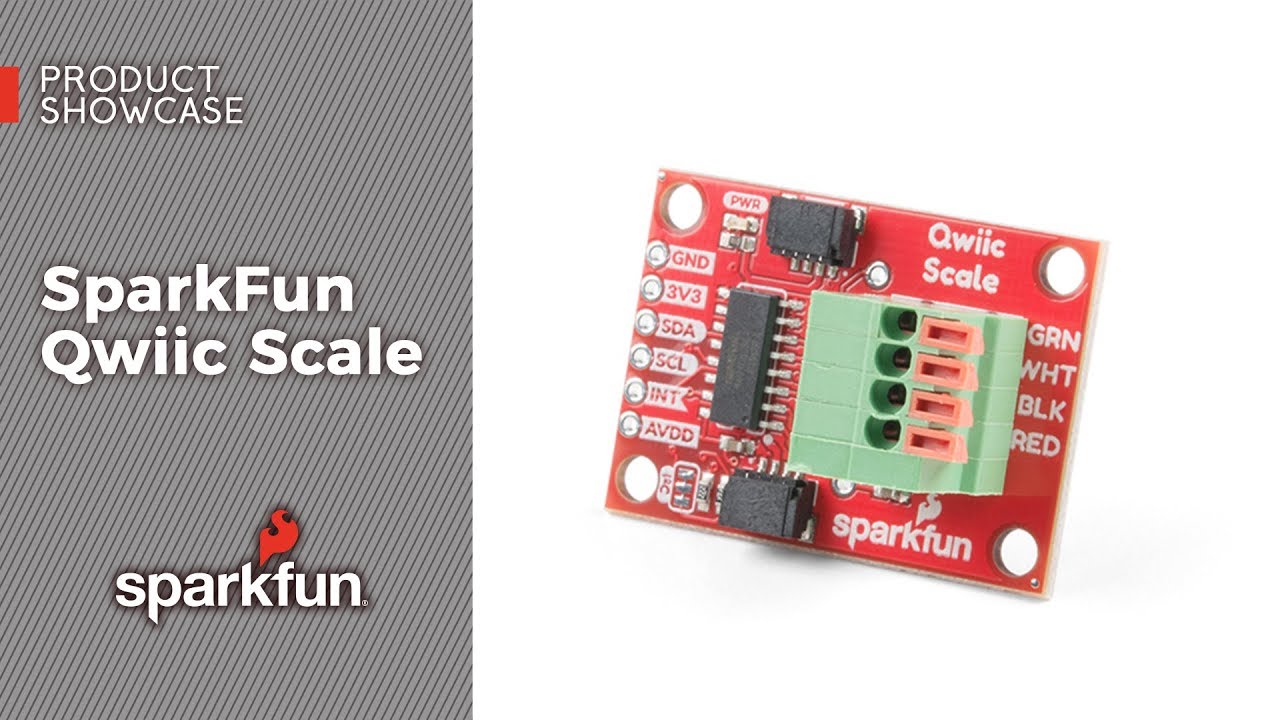
When you connect a load cell to the Qwiic Scale, you can translate the sensor data into something your microcontroller can read. The NAU7802 is an ADC with inbuilt amplification and I2C output to amplify and convert the readings from a standard load cell. A load cell is basically a device that converts pressure or force into electrical signals. In most cases, this signal is very small and needs to be amplified. There are many common chips that read and amplify the change, but the NAU7802 goes one step further and converts everything into a true I2C output (on a Qwiic connector).
The board has four spring terminals to which you can connect your load cell without having to solder. In addition to the I2C pins, the board has an interrupt pin and AVDD led out to the edge of the board. The differential input signals (plus a second set of input signals) are also broken out to the centre of the board.
Note: The I2C address of the NAU7802 is 0x2A and is hardware defined. A multiplexer/mux is required for communication with several NAU7802 sensors on one bus. If you want to use more than one NAU7802 sensor, you should use the Qwiic Mux Breakout.
The NAU7802 Qwiic Scale can also be automatically recognised, scanned, configured and recorded with the OpenLog Artemis data logger system. No programming, soldering or set-up required!
Features:
- Operating voltage: 3.3V (NAU7802: 2.7V-5.5V)
- 24-bit two-channel analogue-to-digital converter
- Programmable gain amplifier
- On-chip temperature sensor
- Simultaneous 50Hz and 60Hz suppression
- Programmable PGA gains from 1 to 128
- Programmable ADC data output rates
- External differential reference voltage range from 0.1V to 5V
- Low power consumption and programmable power management options
- <1uA standby current
- 2x Qwiic connectors
Properties
| Zolltarifnummer: | 85423911 |
|---|---|
| Brand: | SparkFun |
| Country of Origin: | USA |
| EAN: | 5904422352400 |
| Gross Weight (kg): | 0.004 |
| Manufacturer ID: | SEN-15242 |
| Product ID: | SEN-15242 |
Manufacturer
SparkFun
SparkFun – open-source electronics from Colorado
SparkFun Electronics was founded in Boulder, Colorado in 2003 and is one of the defining companies of the maker movement. The idea behind it: electronics should be accessible to everyone. That is why SparkFun publishes the schematics and layouts of its products as open-source hardware and accompanies them with detailed guides and tutorials.
Development and manufacturing take place in the USA. SparkFun is best known for the Qwiic system, which allows sensors and modules to be combined via plug connection without soldering, as well as for the Thing Plus and MicroMod platforms for IoT and embedded projects.
At BerryBase you will find a large selection of genuine SparkFun products – from breakout boards for quick prototypes to development boards for professional applications.
Manufacturer and safety information
SparkFun Electronics
6333 Dry Creek Parkway
DE CO 80503 Niwot
https://www.sparkfun.com
support@sparkfun.com
WEEE number: 17968585
Responsible person for the EU
Sertronics GmbH
Am Studio 20d
DE 12489 Berlin
https://www.berrybase.de
info@berrybase.de
Safety instructions
- Protect sensor from moisture, extreme heat and dust.
- Do not disassemble or open improperly.
- Protect from damage due to mechanical or electrical overload.
- Only use with compatible devices and voltage values.
- Work carefully when connecting to avoid short circuits.
- Do not use in the vicinity of strong electromagnetic fields.
- If damaged or malfunctioning, dispose of properly, do not dispose of with household waste.
- Recycle electronic components in accordance with regional regulations for electronic waste.
Reviews 0
Login


Customers also viewed
